Guides · Clermont, Florida
The History of Clermont in 7 Landmarks
Clermont’s history is written in what remains: a lake, a tower, a road, and the stubborn geometry of hills that once carried citrus.
The Hills Themselves
Before any landmark, there is the terrain. Peninsular Florida’s steepest ground runs through this town, which is why Clermont exists at all. In 1884, the town was established here, and the name came from A.F. Wrotnowski’s French hometown—a manager of the Clermont Improvement Company who clearly saw something in the elevation. The hills were not a scenic accident. They were the point.
Citrus took hold on those slopes. Orange groves dominated the county’s economy into the mid-twentieth century, and the hills made the difference. Cold air drains downhill, so the high ground gave growers a fighting chance. For decades, that was enough.
The Citrus Tower
Then came 1956. The Florida Citrus Tower rose 226 feet over the groves, one of Florida’s earliest roadside landmarks. It was built to celebrate an industry, and it did so from a vantage point that showed off the crop in every direction. At the time, the view was the product.
Now the tower still stands, but the landscape it overlooks has changed beyond recognition. The groves dwindled fast under repeated freezes and suburban development. The tower outlived the industry it was built to celebrate. Today it is a monument to a bet that mostly lost—and a reminder that the town’s steepest asset was never the oranges. It was the ground.
The Reincorporation
The timeline of Clermont’s civic life is choppy, which tells you something about ambition and failure. Established in 1884, incorporated as a town on 9 June 1891. Then disbanded on 25 May 1895. A town that gave up. Reincorporated as a city on 28 December 1916—and this time, it stuck.
That gap between 1895 and 1916 is worth sitting with. The first incorporation failed, likely because the settlement was too small or too poor to sustain a government. The second one took. Clermont learned to hold its own, and the city that emerged from that second incorporation is the one whose bones you still see.
Lake Minneola Waterfront
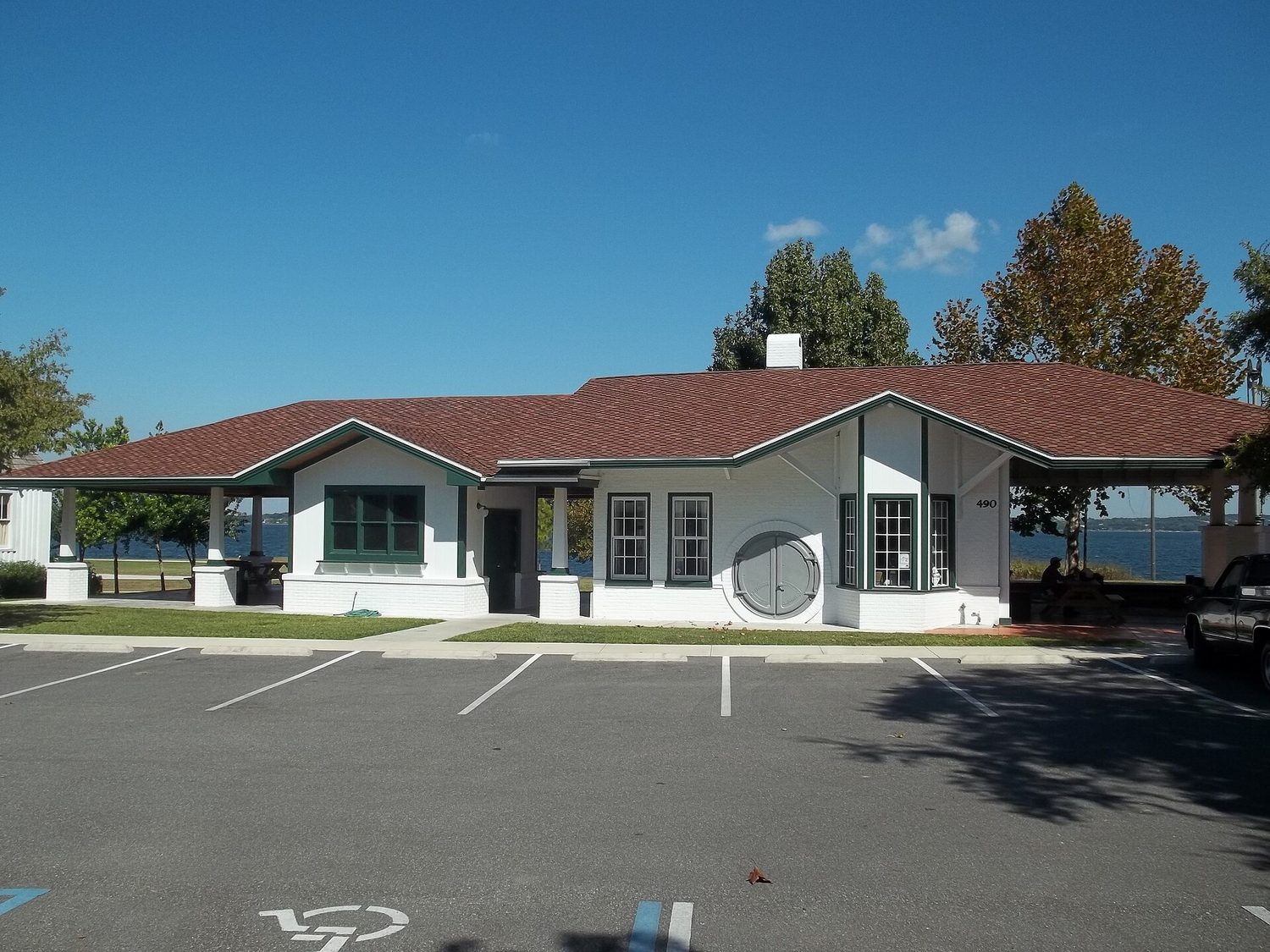
The lakes were always part of the deal. Waterfront Park on Lake Minneola gives the town its public face: swimming, fishing piers, a playground. It is not a historical artifact so much as a continuous argument for why people stayed. When the groves failed, the water was still there.
The park is also a civic decision. Clermont could have let its lakefront go to private docks and gated lawns. Instead, the town kept a public edge. That choice says more about the place than any plaque could. The hills give the town its drama; the lake gives it a living room.
The National Training Center
Clermont’s slogan, “Choice of Champions,” was adopted in 2014. The claim rests on the National Training Center, established in 2001. Triathletes and endurance athletes come here for the same reason the citrus growers did—the hills. A flat town cannot train a climber. Clermont can.
The slogan is marketing, sure. But it is grounded in something real. The terrain that once made citrus viable now makes athletes fast. The hills did not change. The crop did. That is the town’s whole story in miniature.
The Housing Mark
The census numbers tell the modern version. Population sits at 44,984, with a median age of 42.4 years. Of 18,718 housing units, 558 are held for seasonal or recreational use. That is not a vacation town by Florida standards—about 3 percent. But 1,800 units sit vacant, which is a different kind of signal.
Median home value is $368,600. Median gross rent is $1,774. Those are not cheap numbers for inland Florida. They reflect the hills, the lake, the training center, and the simple fact that Clermont is close enough to Orlando to matter but far enough to keep its own character. The groves are gone; the desirability is not.
The People
Unemployment is 5.9 percent. Median household income is $79,789. More than a third of adults—35.7 percent—hold a bachelor’s degree or higher. These are not plantation economy numbers. They are post-agricultural numbers, the profile of a town that traded oranges for endurance sports and commuter comfort.
The freezes that killed the citrus did not kill Clermont. They forced a pivot. The town could have become a shell, a roadside memory with a tower and a sad story. Instead, it rebuilt itself around the hills. The tower is now the relic. The hills are the future. That is the landmark that matters most, and it never changes.
The View
Stand at the tower or the waterfront and you see the same geography that Wrotnowski saw in 1884. The citrus is gone, but the steepness remains. That is Clermont’s real history: not a series of buildings, but a relationship with ground that keeps forcing reinvention. First citrus, then training, then housing. The names change. The hills do not.
That is the town’s seven landmarks, in order: the terrain, the tower, the failed incorporation, the waterfront, the training center, the housing stock, and the people who keep showing up. Most Florida towns are flat and forgettable. Clermont is neither. It earned its slogans the hard way—by losing an industry and finding another use for the land.
Every business named above is one we hold a listing for, and every date traces to a source on our sources page. We do not describe menus, interiors or service we have not verified. Details change — confirm before you travel.