Guides · Clermont, Florida
Clermont, Florida: What Has Changed and Why
Clermont's citrus past and its present-day climb to a cycling and triathlon hub are the same story: the hills that made the groves possible now make the town a destination, even as the orchards themselves are gone.
How Clermont's Hills Built a Citrus Town
Founded in 1884 and incorporated as a town in 1891, Clermont was built on terrain that most of Florida lacks. The city, named for the French hometown of A.F. Wrotnowski of the Clermont Improvement Company, rose over the Lake Wales Ridge—the steepest ground in peninsular Florida. Those slopes drained well and caught the sun. For decades, they were ideal citrus country. Orange groves spread across the ridges and down toward the lakes, and the county’s economy ran on the harvest. By the mid-twentieth century, the groves were the defining sight: row after row of trees climbing hills that looked nothing like the flat Florida of postcards.
The Freezes That Ended Clermont's Citrus Era
Then the freezes came. Repeated hard freezes in the latter half of the twentieth century hammered the groves, and the industry dwindled fast. Suburban development moved in where the trees came out. The landscape transformed from orchard to residential. The same hills that had made the citrus possible were now being graded for roads and rooftops. By the time the freezes and sprawl had finished their work, most of the groves were gone—not replaced by another crop, but by houses, shopping plazas, and the quiet expansion of a commuter town. The economic engine had shifted irreversibly.
Why Clermont Became 'Choice of Champions'
The hills didn’t stop being useful; they just found a different market. In 2001, the National Training Center established itself in Clermont, and the town suddenly had a reason to market its topography. Cyclists and triathletes came for the same steep grades that had once drained citrus trees—the climbs that make Florida racing flat everywhere else. In 2014, the city formally adopted the slogan “Choice of Champions,” leaning into the athletic identity. The hills that had been an agricultural asset became a recreational one. The town began drawing athletes, coaches, and events built around endurance sports.
Clermont's Demographics Today
The census data paints a picture of a relatively affluent, educated, and stable community. Clermont’s population stands at 44,984, with a median age of 42.4 years. The median household income is $79,789. 35.7 percent of residents hold a bachelor’s degree or higher. The unemployment rate sits at 5.9 percent. Housing reflects both permanence and turnover: 18,718 total units, of which 1,800 are vacant and 558 are held for seasonal or recreational use. The median home value is $368,600, and the median gross rent is $1,774. The seasonal units hint at the town’s draw as a place to keep a second home—often, given the athletic infrastructure, a base for training or racing.
| Clermont Then and Now: A Snapshot | Then (Citrus Era) | Now (Champions Era) |
|---|---|---|
| Economic base | Citrus groves and packing | Recreation, commuting, services |
| Defining terrain | Drainage and frost protection | Cycling climbs and triathlon courses |
| Landmark | Groves on every ridge | Florida Citrus Tower overlooking suburbs |
| Population trend | Farming and small-town | Growing, educated, relatively affluent |
| Identity | Agricultural town | “Choice of Champions” |
Clermont's New Community Events
The civic calendar has shifted to match the new identity. The biggest event is Pig on the Pond, a three-day festival held at Waterfront Park on Lake Minneola, run by Project Scholars, a non-profit. It draws more than 20,000 people and is the largest event in south Lake County. The park itself—with swimming, fishing piers, and a playground—anchors a modern lakefront life that has nothing to do with oranges. The festival, now in its 27th year as of 2026, is the kind of community gathering that replaced the harvest rhythms of the groves.
The Citrus Tower: A Landmark of Change
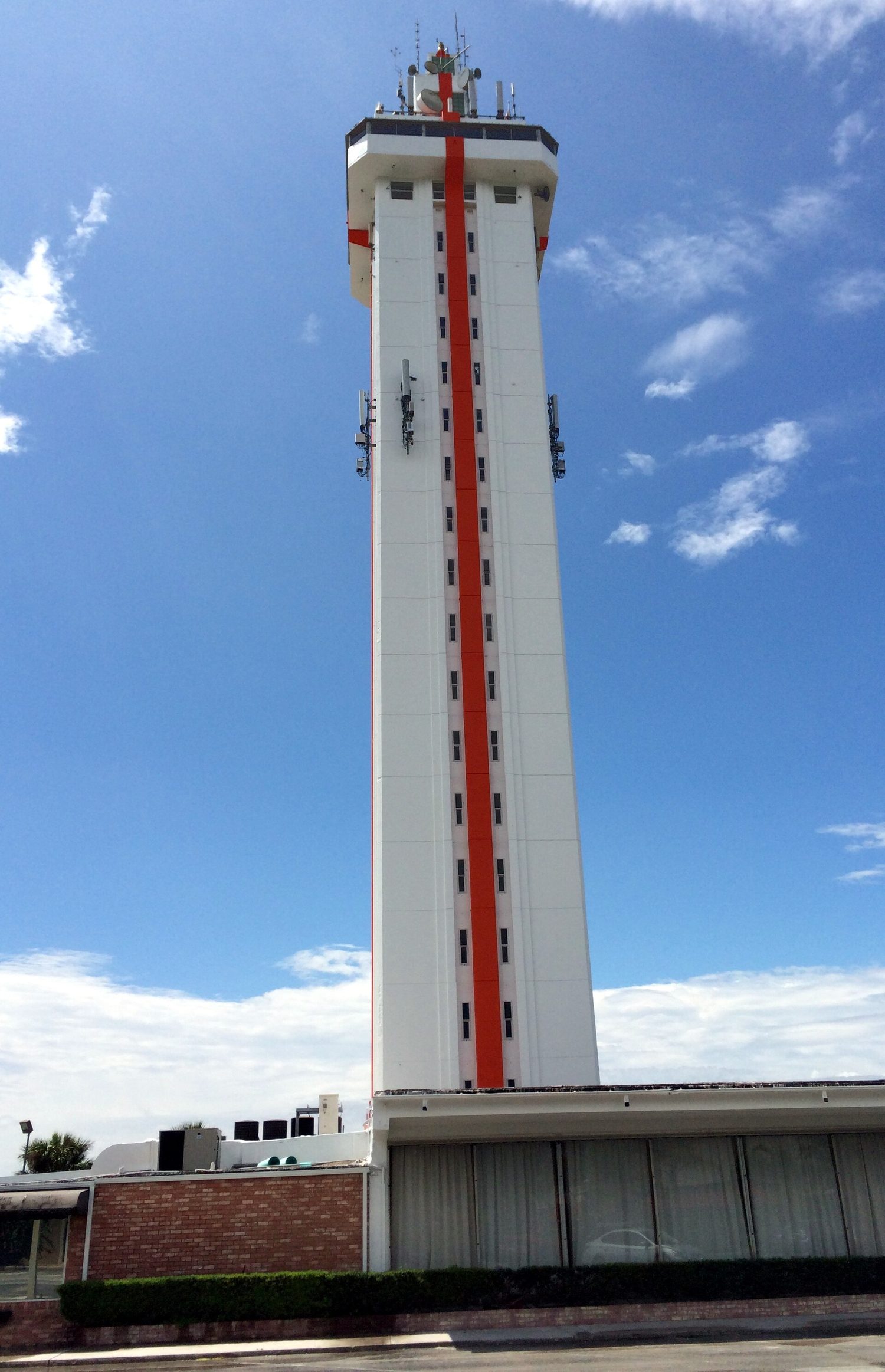
The Florida Citrus Tower, built in 1956, still stands over a landscape whose groves have largely gone—one of Florida’s earliest roadside landmarks outliving the industry it was built to celebrate. It was meant to be a vantage point for tourists to admire the endless orchards; now it offers a view of the suburban expansion that replaced them. The tower is a visual timeline: look one way, and you might see a remnant grove; look the other, and you see rooftops and roads. It has become a monument not to citrus, but to the change itself—a reminder that the industry it celebrated is now mostly memory.
What Has Changed in Clermont
The groves are gone, killed by freezes and built over by development. The hills remain, and they are the reason Clermont found a second act. The same terrain that once drained orange trees now hosts triathletes and cyclists, and the town has branded itself accordingly. The population is up. The housing stock is solid. The seasonal units suggest people want a piece of the place, even if only for part of the year. The Citrus Tower stands as an artifact of the old economy, while Waterfront Park and Pig on the Pond define the new community life. Clermont didn’t lose its identity when the citrus died; it just regraded it.
Common questions
- Why is Clermont so hilly?
- Clermont sits on the steepest ground in peninsular Florida. The hills were formed by ancient sand dunes, and citrus groves once covered them until repeated freezes and suburban development took over. Today the terrain is what makes the town distinctive.
- What happened to all the orange groves?
- Citrus dominated the local economy into the mid-twentieth century, but repeated freezes and suburban growth wiped out most groves. The 1956 Florida Citrus Tower still stands as a landmark, outliving the industry it was built to celebrate.
- Is Clermont a good place to live or just a tourist stop?
- It's a real city with about 45,000 residents. The median age is 42.4, median household income is $79,789, and 35.7% of adults hold a bachelor's degree or higher. It's not a resort town, though 558 homes are for seasonal use.
- What's there to do in Clermont?
- Waterfront Park on Lake Minneola offers swimming, fishing piers, and a playground. The town also hosts Pig on the Pond, a three-day event drawing over 20,000 people each year. The National Training Center, established in 2001, is why the city adopted the slogan 'Choice of Champions' in 2014.
- How expensive is housing in Clermont?
- The median home value is $368,600, and median gross rent is $1,774 per month. Of 18,718 housing units, about 1,800 are vacant. It's more affordable than many coastal Florida cities but not cheap.
- When was Clermont founded and why is it named that?
- Clermont was established in 1884 and incorporated as a town in 1891, though it disbanded in 1895 and reincorporated as a city in 1916. It's named for the French hometown of A.F. Wrotnowski, who managed the Clermont Improvement Company.
Every business named above is one we hold a listing for, and every date traces to a source on our sources page. We do not describe menus, interiors or service we have not verified. Details change — confirm before you travel.